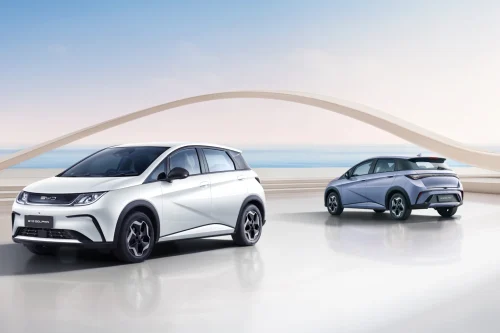


The new BYD Han EV Flash Charging Edition, starting at 179,800 RMB, has recently attracted significant attention in China’s EV market.
This review is based on real-world driving experience and focuses on one key question: Is this model actually worth buying, or is it just a technological showcase?
1. The Highlight Feature: “Flash Charging” Performance
The biggest selling point of the Han EV Flash Charging version is its ultra-fast charging capability.
Official claims state that the battery can charge from 10% to 70% in around 5 minutes under ideal conditions.
In real-world use, the experience is impressive—but highly dependent on infrastructure.
During a test drive from Changsha to Zhuzhou, the vehicle arrived at a BYD ultra-fast charging station with about 20% battery remaining. While stopping for a short coffee break, the battery level increased to around 60%.
The convenience is real—but only when using dedicated ultra-fast charging stations.
Key limitation:
- Flash charging is only effective where ultra-fast charging stations are available
- In smaller cities, suburban areas, or some highway service zones, this advantage may not be usable
- Long-term battery degradation from frequent ultra-fast charging has not been fully disclosed by the manufacturer
2. Cold Weather Charging Performance
One of the more practical concerns is charging stability in low temperatures.
Drivers from northern regions report that fast charging in winter is slightly slower compared to normal conditions, with delays of a few minutes.
However, the system remains stable enough to reduce range anxiety during cold-weather travel.
For users in southern China or those with home charging access, the benefit of flash charging becomes less significant, as overnight charging is usually sufficient.
3. Real-World Range vs Official Figures
The official CLTC range of the Han EV Flash Charging version is 705 km, with a claimed energy consumption of 10.8 kWh/100 km.
However, real-world performance varies:
- Winter highway driving: 13–14 kWh/100 km → effective range ~550–600 km
- City driving with congestion: 12–13 kWh/100 km → reduced efficiency
This means the official 705 km figure represents ideal laboratory conditions rather than everyday usage.
4. Performance and Driving Experience
The vehicle is equipped with a 240 kW electric motor, enabling acceleration from 0–100 km/h in approximately 6.5 seconds.
In daily urban driving, the acceleration provides responsive performance at traffic lights and quick overtaking capability on highways.
However, in low-speed traffic conditions, this performance advantage is less noticeable.
The real value appears during:
- Highway overtaking
- Uphill driving
- High-speed merging situations
5. Smart Features and Interior Technology
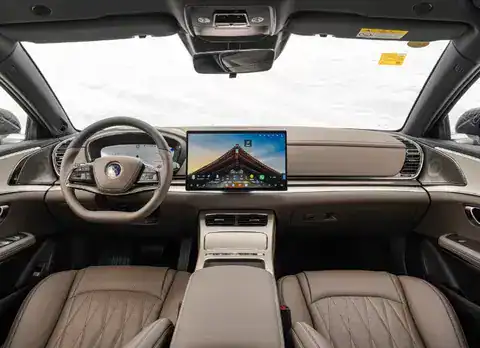
The vehicle comes with the DiLink 100 infotainment system, along with smartphone-based remote control functions.
Key features include:
- Heated and ventilated seats
- Customizable UI themes
- Remote vehicle control via mobile app
While the system is smooth and functional, it is not considered groundbreaking compared to other modern EVs.
One notable benefit is the 1-year free flash charging service, which may reduce charging costs for frequent long-distance users.
6. Who Should Buy the Han EV Flash Charging Version?
Based on real-world experience, the Flash Charging version is best suited for:
- Drivers who frequently travel between cities
- Users who rely on public charging infrastructure
- People without access to home charging
- Buyers seeking reduced charging downtime during long trips
It is less suitable for:
- Short-distance urban commuters
- Home charging users
- Drivers who rarely travel long distances
7. Practical Buying Advice
To avoid unrealistic expectations, consider the following:
- Check charging infrastructure first
Ensure your frequently used routes have ultra-fast charging coverage. - Do not rely exclusively on flash charging
Occasional fast charging is fine, but regular use may not be necessary. - Adjust range expectations
Expect 15%–20% lower range in winter or highway conditions. - Treat smart features as secondary value
They improve convenience but are not core purchase drivers. - Understand long-term charging costs
Free charging is limited in time; long-term pricing is not fully transparent.
Conclusion
The Flash Charging version of the BYD Han EV offers a genuine technological advantage, particularly in high-speed charging convenience and long-distance usability.
However, it is not a universal solution.
At a starting price of 179,800 RMB, buyers are essentially paying for:
- Faster charging convenience
- Strong highway performance
- Improved winter travel confidence
But not for unlimited real-world 700 km driving freedom.
[wp_lead_from2]